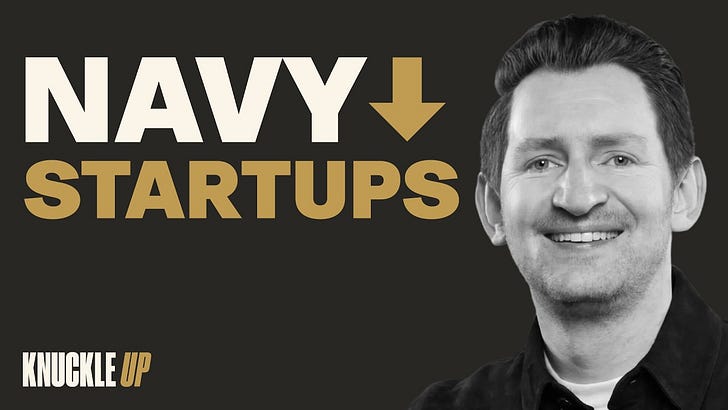


David Paffenholz says Juicebox has not lost a single employee in two years, at a company that has grown from three people to ninety. He credits it to a formula: independence, visible impact, and real equity, what he calls the preconditions for a place where someone feels they can do their life’s work. That formula sits inside a deliberately intense culture: five days a week in the office, no exceptions, but explicitly not 996.
Paffenholz co-founded the company in 2022 with Ishan Gupta, first as PeopleGPT, on a narrow bet: that the hardest part of recruiting was never the workflow, it was search, and that large language models would make search fundamentally different from what LinkedIn and Indeed had already built. That bet has taken Juicebox from $1.5 million in ARR with a three-person team to an $850 million valuation on an $80 million Series B, serving more than 5,000 customers from AI-native startups to large financial services and defense organizations, and positioning itself as the agent-native alternative to LinkedIn’s roughly $8 billion Talent Solutions business.
In this conversation, David walks through why he thinks the “AI recruiter” hype mostly missed the point, how much autonomy he’s willing to give Juicebox’s own agents, why there are still zero engineering managers at a 90-person company, and what changed once he could no longer track what everyone was working on day to day. He’s candid about the calls he’s gotten wrong, including the MCP server he resisted and then had to reverse, and what he’d tell his 22-year-old-self who bet his company on a search bar.
Listen on YouTube, Spotify, and Apple Podcasts
David Paffenholz is the co-founder and CEO of Juicebox, the AI-native recruiting platform he built with co-founder Ishan Gupta out of Y Combinator’s Summer 2022 batch, first under the name PeopleGPT. Juicebox raised an $80 million Series B led by DST Global in 2026 at an $850 million valuation, with Sequoia Capital, Coatue, Y Combinator, and others also participating, and now serves more than 5,000 customers, from early-stage AI startups to large enterprises in financial services and defense. Before founding Juicebox at 22, Paffenholz worked at New Enterprise Associates and Moonfare and on international expansion at Snap Inc., and studied economics at Harvard University. He grew up in Germany. Juicebox has since opened an office in London and grown to roughly 90 employees without losing one in the past two years.
Where to find David Paffenholz:
Where to find Nakul:
Where to find Audacious Ventures:
In this conversation with David Paffenholz:
0:00 Who is David Paffenholz?
2:42 Why did betting everything on search beat the “AI recruiter” hype?
6:57 From search to copilot to agents: how has the product evolved?
10:02 Why hasn’t LinkedIn already built this?
11:34 What’s stopping OpenAI or Anthropic from just building this instead?
13:14 How does Juicebox stay ahead as competitors ship just as fast?
16:25 What made David’s first 60-second LinkedIn video actually work?
18:12 “Message market fit” vs product market fit: what’s the real difference?
19:12 What was the brutal six months after launch actually like?
22:50 Why are large enterprises still slow to adopt AI recruiting?
30:49 What are Juicebox’s only two company values?
32:17 How does Juicebox mandate five days in office without going 996?
35:17 How has Juicebox never lost an employee in two years?
45:32 Does David think 90% of employees need to be “AI-pilled”?
56:57 What happens when a candidate gets 240 outreaches and answers four?
1:05:50 What was David’s biggest mistake as a first-time CEO?
1:10:30 Quickfire: red flags, overrated advice, and Cursor’s hiring machine
1:16:10 How is David thinking about kids and life at 25?
David’s sharpest lines from this conversation:
On the insight the whole company was built on:
“Almost everything comes down to search. Are they finding the right talent, and are they bringing net new talent into their funnel?”
On the difference between hype and traction:
“Message market fit is when you have people signing up and starting to use the product. Product market fit is when they retain.”
On staying narrow instead of building everything:
“We want to stay narrow on sourcing. We want to help you find the best candidates, and do just that.”
On empowering fast decisions:
“Everyone is empowered to make those decisions, and it’s totally okay if someone gets them wrong.”
On what makes people stay:
“There’s this concept of being the place where someone feels that they can do their life’s work.”
On why founders should trust their recruiters:
“The recruiter is their ally in that process.”
On the advice he’d give his earlier self:
“I’d tell the earlier version of myself to be even more comfortable in being wrong and telling others that I was wrong.”