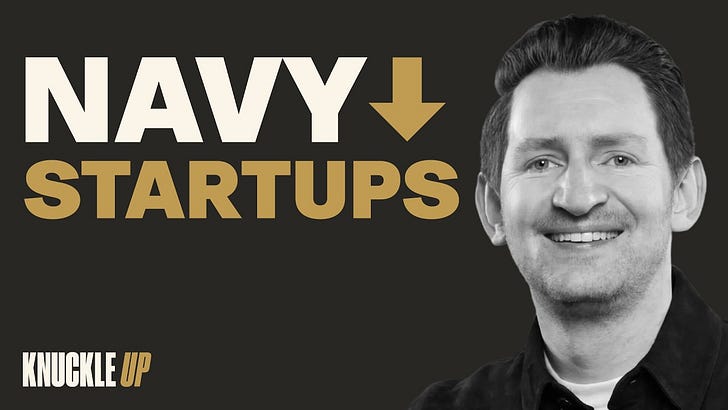

Will Bryk was working as one of the first engineers at Cresta, writing a book about the history of civilization on the side, when the research started to feel absurd. “Google is great for surface-level investigations,” he says. “But it is not built to find every article on what people ate in medieval times across different regions of the world.” The frustration with accessibility of information went back to high school. He recalls thinking how ridiculous it is that we can split the atom and get to the moon, but still find it hard to understand what is happening at the border. To him, that’s an error in humanity.
Then GPT-3 arrived, and with it, the possibility of a different kind of a search engine. Will and his college roommate Jeff Wang started Exa in 2021 with the lofty goal of building one better than Google. Five years on, Exa has raised $250 million at a $2.2 billion valuation led by a16z, its crawlers track over 500 billion URLs, and it powers search for Cursor, Cognition, HubSpot and more than 5,000 companies.
In this conversation, Will walks through how he runs the company making that bet. Why he gets genuinely upset when someone tries to introduce a process. What a non-playable character is and why Exa screens them out. Why the “bitter lesson” works on compute but not on people. And why a founder whose role models are Spider-Man and Ethan Hunt from Mission Impossible says he has not had a single thought about burnout in the past couple of years.
Listen on YouTube, Spotify, and Apple Podcasts
Will Bryk is the co-founder and CEO of Exa, the AI search company founded in 2021 that builds web search infrastructure for AI agents and raised $250 million at a $2.2 billion valuation led by Andreessen Horowitz in May 2026. Exa’s search API powers Cursor, Cognition, HubSpot, OpenRouter and Monday.com, and the company says it serves over 5,000 companies and more than 400,000 developers, with crawlers tracking over 500 billion URLs. Bryk co-founded Exa with Jeff Wang out of Y Combinator’s Summer 2021 batch. Before Exa he was one of the first engineers at Cresta, where he built real-time AI products. He studied computer science and physics at Harvard University, where he researched human-AI interaction and led the robotics club.
Where to find Will Bryk:
Where to find Nakul:
Where to find Audacious Ventures:
In this conversation with Will Bryk:
00:00 Who is Will Bryk?
01:49 Why do agents need a different search engine than humans?
02:53 How can an independent search company survive the big labs?
07:33 What does the internet look like when agents do the searching?
10:19 How did writing a book on the history of civilization lead to Exa?
15:39 Why does Exa hire first-principles thinkers, not rebels?
18:05 What is a “non-playable character,” and why does Exa screen for it?
19:49 How does Exa win engineers against the labs’ packages?
21:30 Why does Will kill process “before it lays eggs”?
26:27 Does the “bitter lesson” apply to humans?
29:52 What breaks when a company outgrows a single room?
34:47 Are there 100x and 1000x engineers now, not just 10x?
37:32 Why should nothing at Exa ever take a month to ship?
45:30 Where does Will’s drive actually come from?
48:28 Why are Will’s role models fictional, not real?
51:05 What does “We’ll figure it out” mean at Exa?
54:05 Why do Will’s best thoughts happen at 2:00 AM?
57:47 Quickfire: red flags, young founder myths, and Will’s mission impossible?
Will’s sharpest lines from this conversation:
On why information is the mission:
“That to me is just an error in humanity. Why can’t they figure out how to share information in a normal way? Why is everything politicized? I always thought this was ridiculous, and I don’t accept it.”
On process:
“I think you could solve a lot of problems with culture, not process.”
On the pace at Exa:
“A month is an insane amount of time. Nothing should ever take a month to ship at Exa.”
On why his heroes are fictional:
“It’s almost like an oxymoron for there to be a famous real superhero, because if you’re a real superhero, you’re anonymous.”
On what burnout actually is:
“If you actually think about what burnout is, it’s wheels turning but not moving.”
On what he is still trying to solve:
“Perfect alignment within the company, on what is most important and why this matters. This is my mission, if I choose to accept it.”
On what he screens out:
“We really try to avoid non-playable characters. People who just go through life as if they’re on a stream and they have no agency over themselves.”
On how a CEO’s words land:
“I might say something like, ‘Oh, lunch should be at this time,’ but I’m joking, and then suddenly it’ll be at that time. I love brainstorming, but sometimes when I’m brainstorming, people interpret it as commands.”